
Two walks, 135 years apart
Chattanooga celebrated the bridge by walking across it.
On February 18, 1891, thousands of people gathered at the foot of Walnut Street to celebrate something Chattanooga had wanted for years: a permanent public bridge across the Tennessee River.
Five young girls took turns driving the final spike into the last plank. A military band played. Local officials spoke about trade, development, and the future of Chattanooga. Contemporary accounts put the dedication crowd somewhere around 4,000 to 6,000 people. [2]
Then the crowd walked across it.
Within days, newspapers were already describing residents crossing and recrossing the bridge simply because they enjoyed being there. One report called it a promenade and predicted it would become a favorite place for people who were, in the wonderfully nineteenth-century wording of the time, "sentimentally inclined." [2]
In other words, romantic walks on Walnut Street Bridge are almost as old as Walnut Street Bridge.
That detail feels especially appropriate in 2026. After an approximately 18-month closure for major renovation, the city will reopen Walnut Street Bridge on Saturday, October 3. After the official program and ribbon cutting, Chattanooga will once again celebrate by walking across the bridge together.[10]
A lot has happened between those two walks.
Before Walnut Street
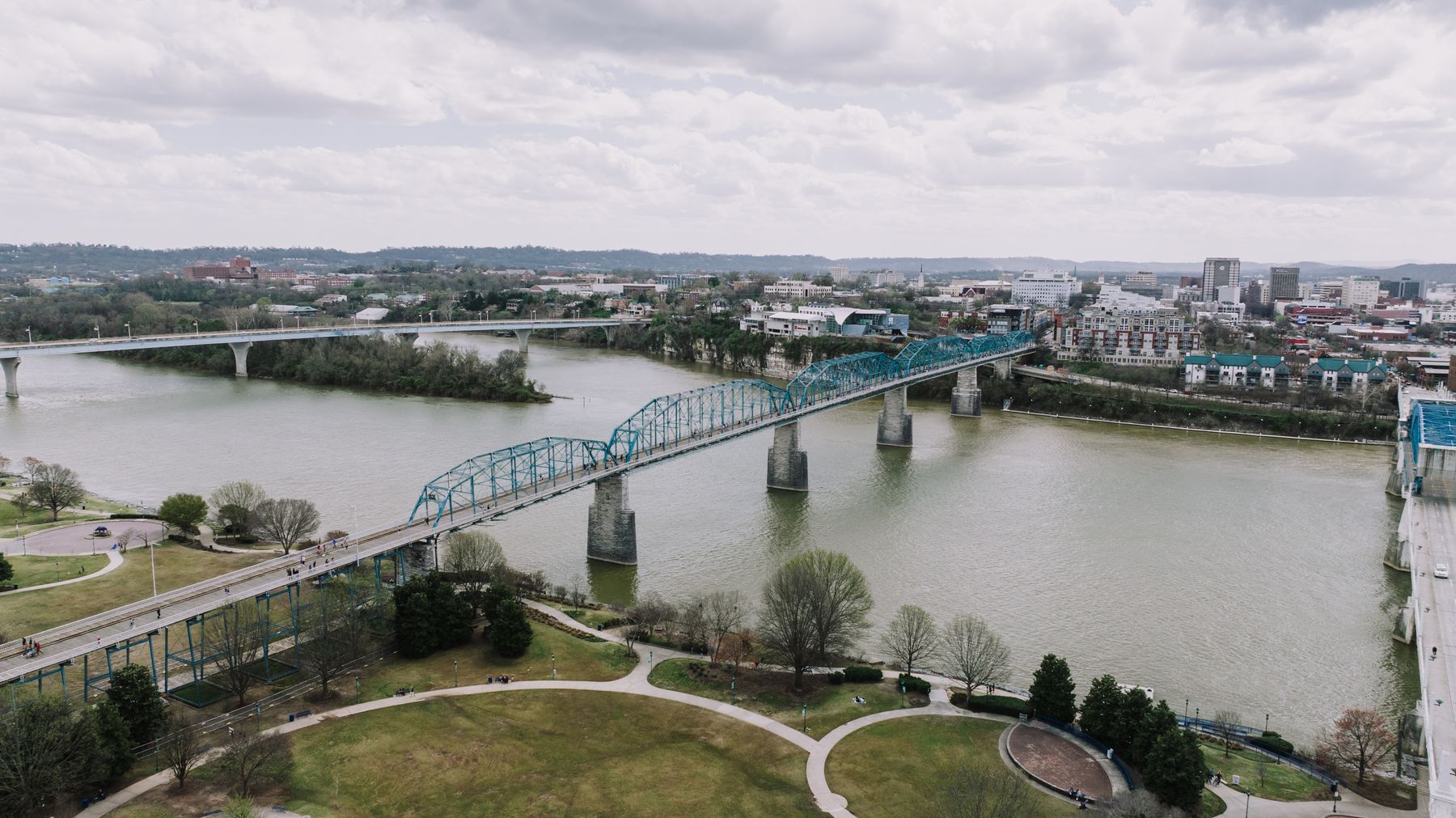
The Tennessee River was a real barrier.
Modern Chattanooga has several easy ways to cross the Tennessee River. Nineteenth-century Chattanooga did not.
Union forces had constructed a military bridge during the Civil War, but the wooden structure deteriorated rapidly and was badly damaged during the flood of 1867. Ferries again became essential for moving people, livestock, wagons, and goods between Chattanooga and communities north of the river.[2]
By the early 1880s, residents and business interests were pushing Hamilton County to build a permanent free bridge. The first serious proposals actually centered on Market Street, not Walnut Street.
When the county repeatedly failed to move ahead, local businessmen organized the Chattanooga Bridge Company in 1887 and tried to build a private toll bridge. That plan also stalled. In 1889, the private company offered Hamilton County money along with its bridge rights and franchises if the county would finally build a free public crossing. The County Court agreed. [2]
Walnut Street ultimately won out over Market Street largely because of geography. The high bluff on the Chattanooga side reduced the approach work and eliminated the need for the movable draw span contemplated at Market Street.[2]
What looked like a practical engineering decision in the 1880s would permanently shape the city.
Building a river crossing
Walnut Street was a major piece of nineteenth-century engineering.
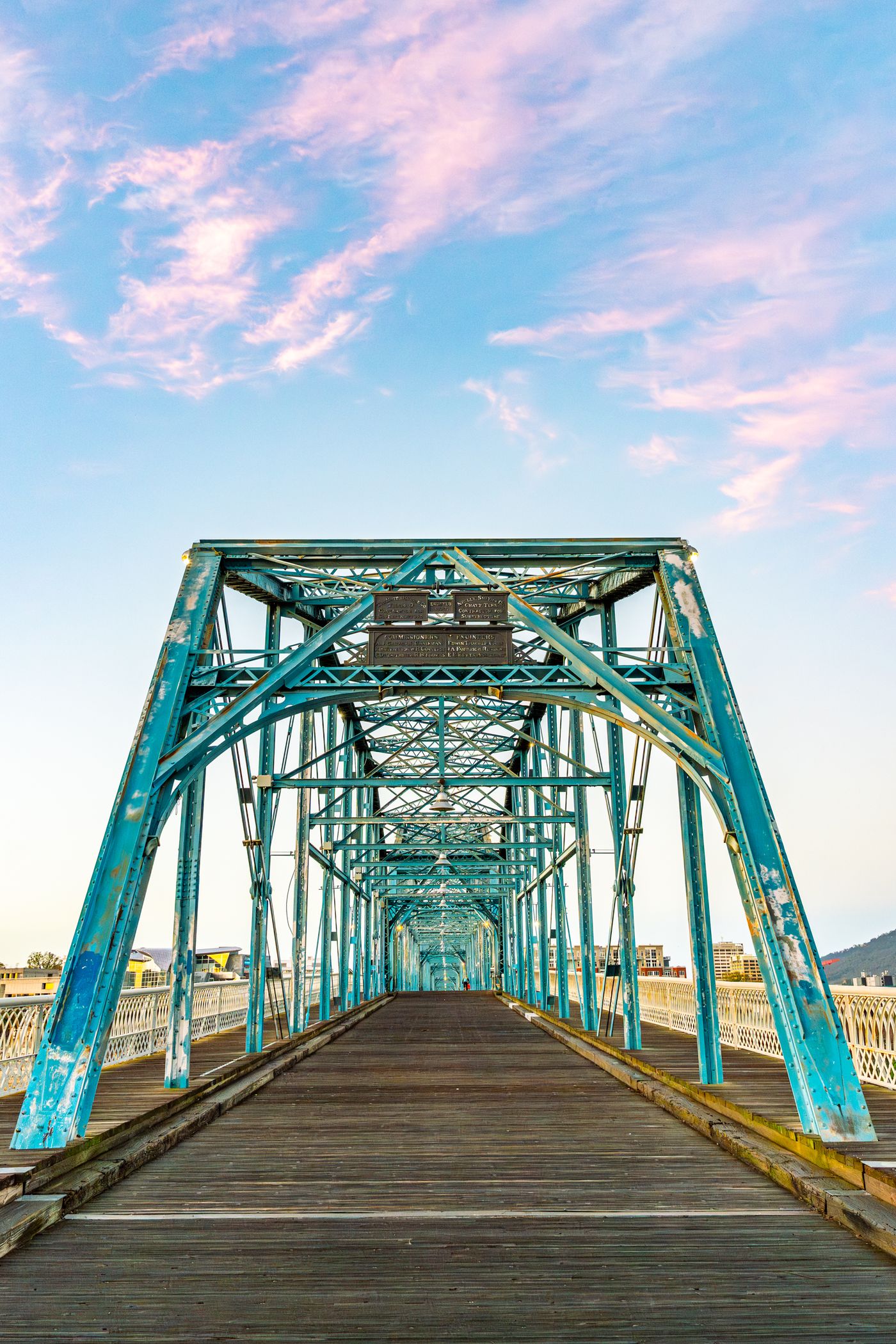
Construction began in 1889. Engineer Edwin Thacher designed the bridge, and the Smith Bridge Company of Toledo supplied the superstructure. The finished structure used six large camelback through-truss spans and a long iron approach viaduct.
The Historic American Engineering Record describes Walnut Street Bridge as apparently the first non-military highway bridge across the Tennessee River and calls it a major feat of structural engineering. The federal documentation also specifically credits the bridge with playing an important role in the economic development of southeastern Tennessee.[1]
Building it came with a human cost. Three workers, John Peacock, Jim Murphy, and Sam Sifford, died in construction accidents. Other mishaps included a barge striking temporary falsework during the project. [2]
When the bridge opened, Mayor I.B. Merriam was already talking about more than convenience. He expected it to draw trade from the north, improve access to timber, coal, and farm products, and encourage development in Hill City. [2]
Walnut Street Bridge was transportation infrastructure, but it was also an economic-development project from day one.
The original walking bridge
Chattanooga discovered the promenade almost immediately.
The modern Walnut Street Bridge became a pedestrian bridge in 1993, but Chattanooga did not have to wait a century to learn that walking over the Tennessee River could be recreation.
Newspaper coverage within days of the 1891 opening already described people using the bridge as a promenade. The bridge was lighted at night, offered open views over the river, and gave residents something Chattanooga had never really had before: the ability to casually walk out over the Tennessee River. [2]
That makes the pedestrian bridge we know today less of a total reinvention than it first appears. Wagons, streetcars, and automobiles used Walnut Street for transportation, but people were also going there simply because they liked being there.
Streetcars meet horse traffic
When electric streetcars arrived, a horse or mule had to go first.
The bridge quickly became part of Chattanooga's streetcar network, which created a problem nobody building a modern bridge would have to solve.
People worried the electric cars would frighten horses.
The first streetcar crossed on February 17, 1891, one day before the dedication. Although the railway was preparing for electric operation, that first car was pulled by mules because Hamilton County initially prohibited electric propulsion on the bridge. [2]
Electric cars were soon permitted, but for roughly the first 90 days each one had to be preceded by a horse or mule. The handler rode on the platform with the motorman, while horse-drawn traffic retained the right of way.[2]
Eventually officials decided Chattanooga's horses had become accustomed to the strange new machines and dropped the animal escort.
Do not let your horse find the beat
Early bridge rules were really about resonance.
Another early rule prohibited riding or driving across the bridge faster than a walk. Violators could be fined $5.
Naturalist Bradford Torrey visited Chattanooga in the 1890s and recorded seeing the warning. His driver responded by whipping his horse and mule into a trot anyway. [2]
The rule had an engineering purpose. A trotting animal creates repetitive impacts. If those impacts line up closely enough with a bridge's natural vibration, the repeated forces can amplify movement in the structure. The historical engineering documentation says the speed rule was meant to avoid that resonant motion. [2]
Long before synchronized pedestrians became a famous bridge engineering problem, Chattanooga was effectively warning travelers not to let their horses find the beat.
A bridge that created destinations
North Chattanooga grew because the crossing changed what was practical.
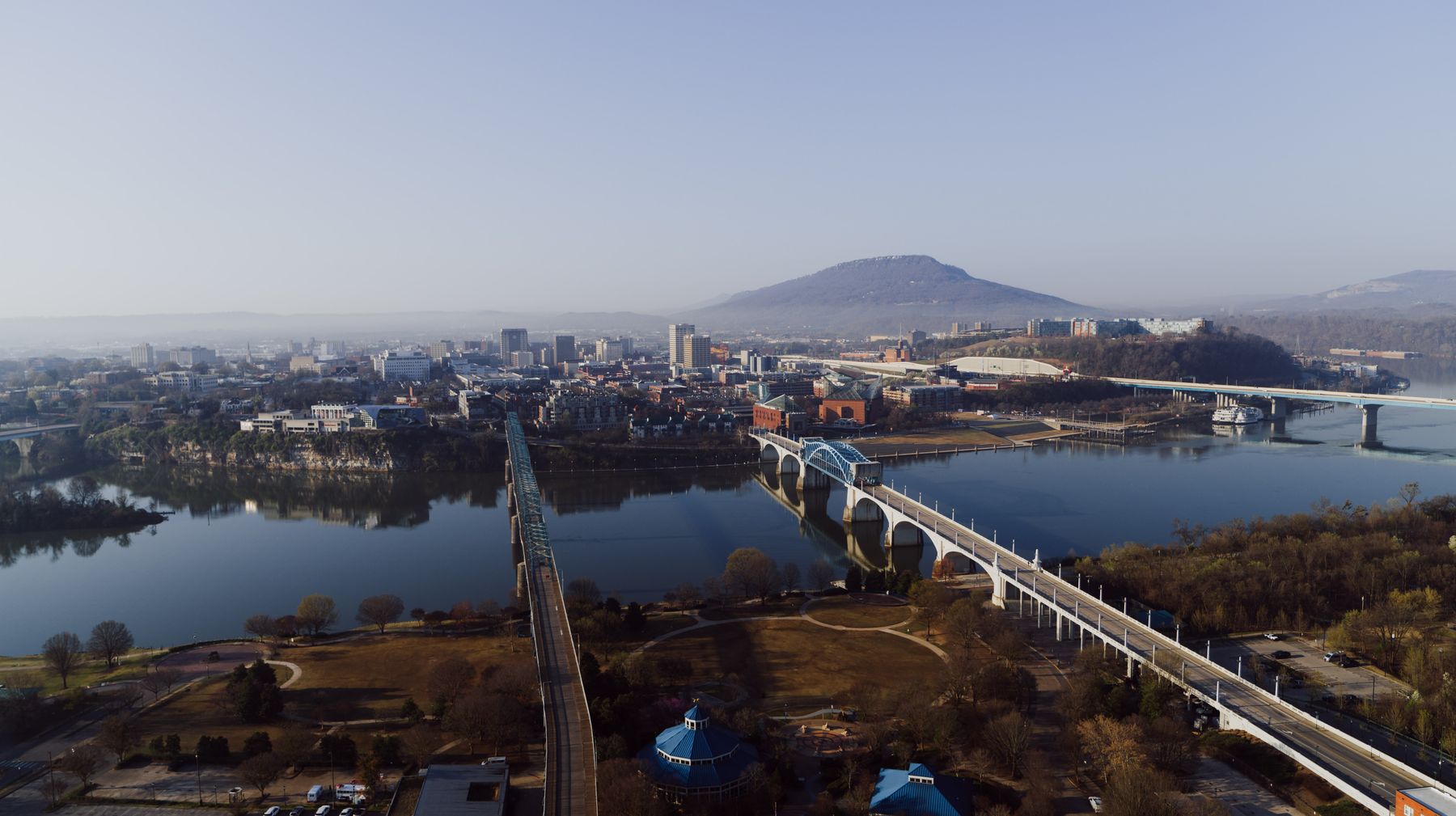
The economic effect of Walnut Street Bridge showed up quickly. Contemporary reporting described the north bank as having grown in only a few years from a scattering of houses into a community of roughly 1,500 people. [2]
Streetcar companies then started giving Chattanoogans reasons to make the trip. There was a dancing pavilion on Stringer's Ridge, a theater served by another line, Sunday balloon exhibitions, and transportation to the area around Normal College. New residential developments followed.
When Bradford Torrey crossed Walnut Street Bridge by electric streetcar in 1894, he visited the new Riverview development and found roads already laid out through land where many houses had not yet been built. [2]
Transportation opened land to development. Development created more reasons to travel. The same feedback loop would appear again around the bridge a century later.
The iron bridge that burned
In 1897, the deck caught fire badly enough that residents tore part of it out.
Walnut Street Bridge was made from an enormous amount of iron, but its deck was wooden, and that turned out to matter.
On September 23, 1897, fire broke out in the bridge flooring. Wind pushed the flames rapidly along the structure until a major portion of the deck was burning. Residents on the north side formed a bucket brigade carrying water up from the river. Another group took a more drastic approach.
They ripped out roughly 10 feet of bridge flooring to create a firebreak. By the time the fire was brought under control, about a span and a half of floor had been nearly destroyed, handrails had distorted in the heat, and streetcar rails had warped. [2]
Hamilton County had not insured the bridge. The county judge reportedly explained that he had never imagined an iron bridge could burn.
The iron was not the problem. The seasoned wood deck had been treated with coal tar and resin. Other deck fires followed over the decades, including one as late as 1952.[2]
A history that cannot be separated from the bridge
Walnut Street Bridge was the scene of two racial terror lynchings.
For most of its life, Walnut Street Bridge has been described as a connector. It was also the site of two murders that belong in any serious account of the bridge.
In 1893, a white mob lynched Alfred Blount, a Black man, at the bridge.
Thirteen years later, the bridge became the scene of the lynching of Ed Johnson, a case that would become nationally significant in American legal history. Johnson had been convicted of raping a white woman, and his attorneys, Noah Parden and Styles Hutchins, challenged the conviction. Their work eventually brought the case before the United States Supreme Court. [3]
The Supreme Court issued a stay of execution while it considered Johnson's appeal. On March 19, 1906, a mob broke into the Hamilton County jail, seized Johnson, took him to Walnut Street Bridge, and killed him there despite the Court's order.[3]
What happened next made the case extraordinary. Because the mob acted in defiance of a Supreme Court order, the Court pursued contempt proceedings against Hamilton County Sheriff Joseph Shipp and others. Six defendants were convicted in United States v. Shipp. [4]
Johnson's underlying conviction was finally overturned by a Hamilton County court in 2000.
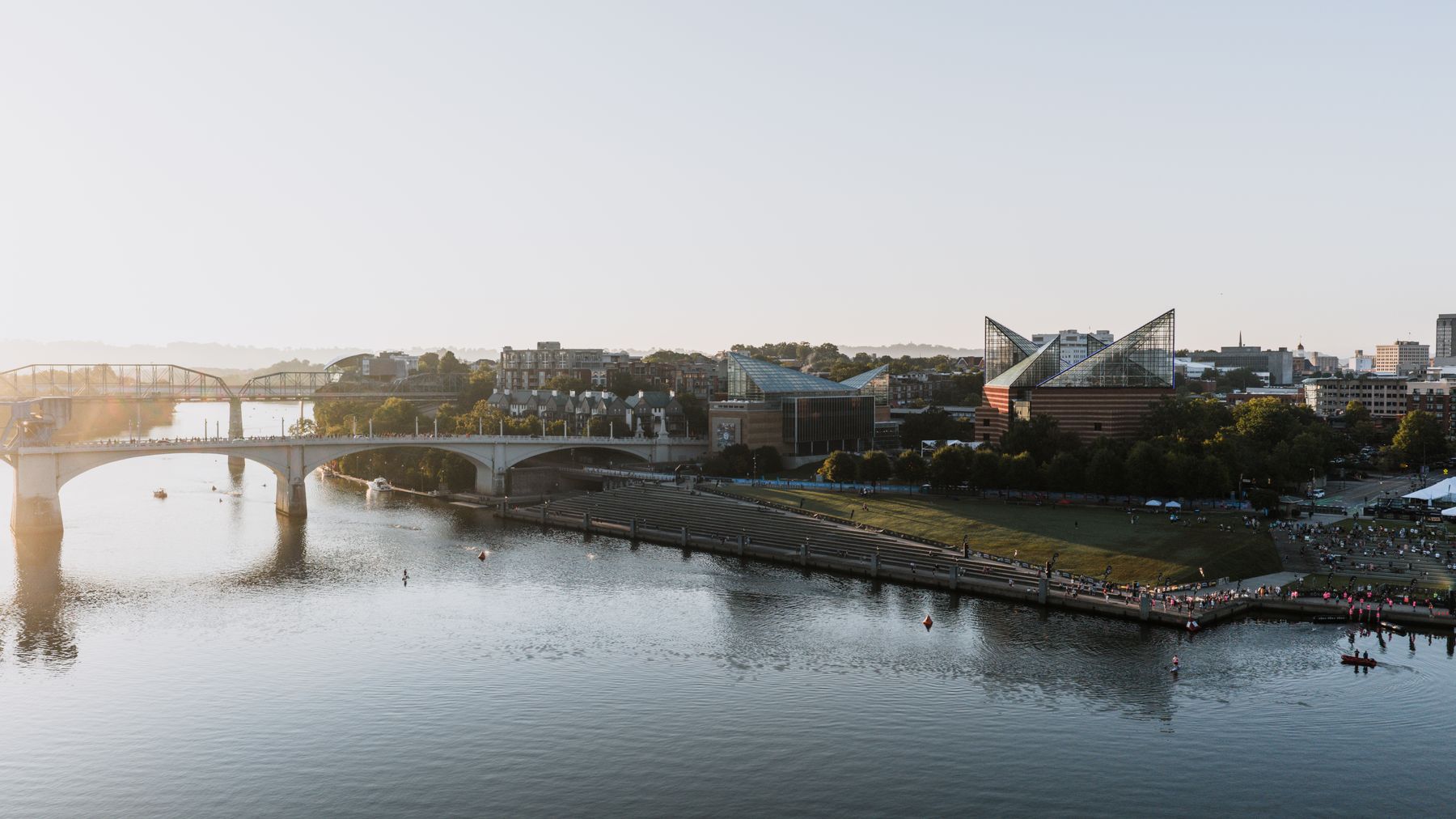
Today, the Ed Johnson Memorial stands near the south end of the bridge. It remembers Johnson, recognizes Parden and Hutchins, and interprets the civil-rights significance of what followed his murder. [5]
Historic preservation does not require celebrating everything that happened at a historic place. Sometimes preserving a place forces a community to retain a physical connection to events that would be easier to forget.
Walnut Street Bridge can symbolize Chattanooga's connection and progress while also marking a place where the city failed some of its own citizens terribly. Both histories belong here.
The automobile era
Modern traffic eventually outgrew a bridge designed for horses and streetcars.
Walnut Street Bridge was repaired and modified repeatedly as vehicles grew heavier and traffic increased. Its basic nineteenth-century structure could only be pushed so far.
By the middle of the twentieth century, engineers were already warning about its limitations. A 1948 report recommended restrictions on heavy traffic and even closing the bridge when winds reached 35 mph. Later reports made increasingly clear that Walnut Street could not continue indefinitely as a normal automobile crossing. [2]
The bridge finally closed to vehicular traffic in 1978.
For many old bridges, that would have been the end.
The second life was imagined early
The idea of a pedestrian bridge appeared before cars were even gone.
One of the better details in Walnut Street's later history is how early someone imagined what it would eventually become.
By 1975, Chattanooga Mayor Pat Rose was already discussing the possibility of preserving the old bridge for pedestrians and bicyclists. The historical engineering record says Rose envisioned it serving a revitalized downtown in that role perhaps 10 to 15 years later. [2]
The prediction was surprisingly close.
The bridge closed in 1978. It reopened for pedestrians in 1993.
But there was nothing inevitable about that outcome.
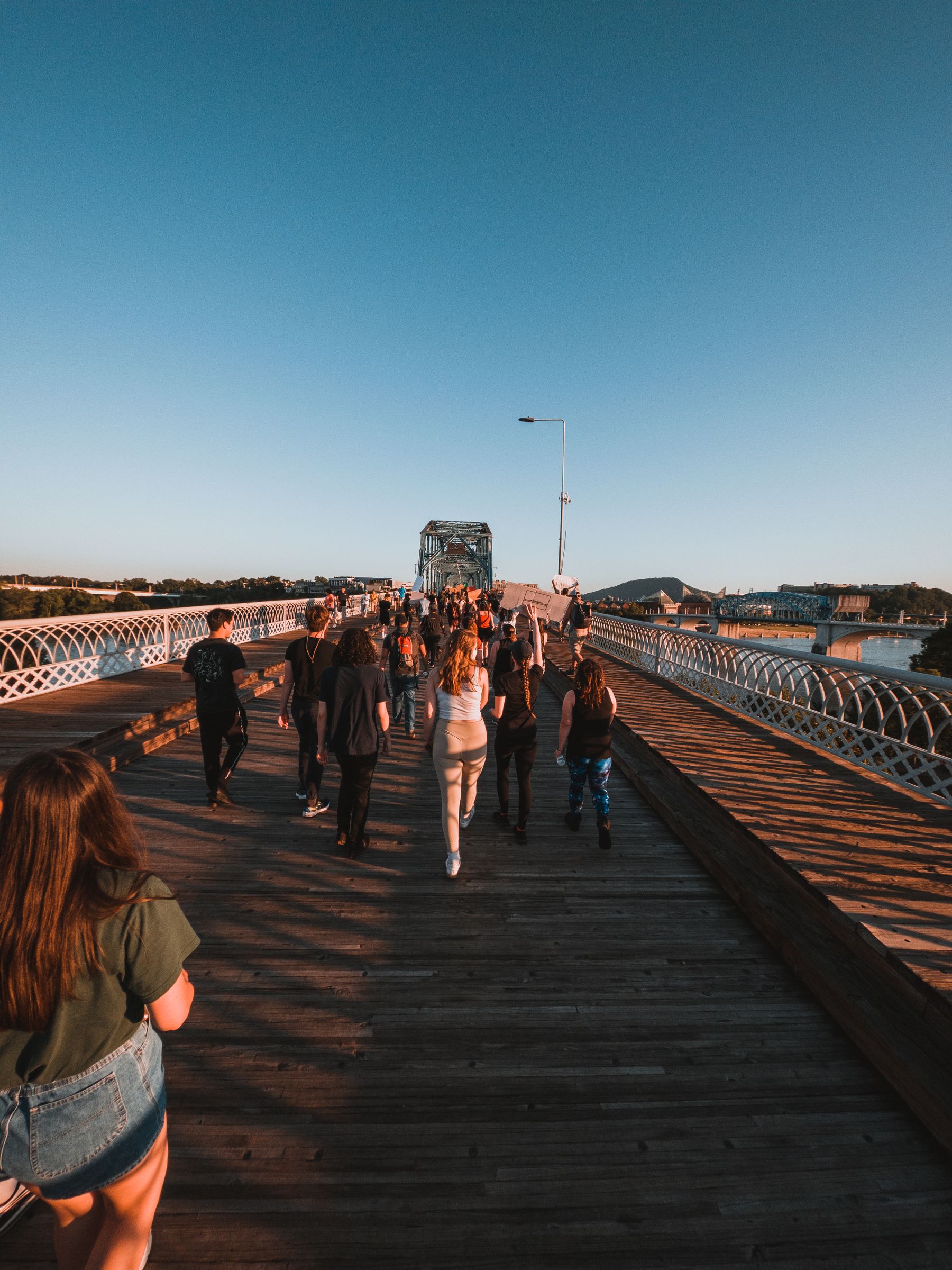
Chattanooga almost lost it
Saving Walnut Street required people to see value that did not exist yet.
Once cars stopped using Walnut Street Bridge, the structure sat deteriorating and demolition became a serious possibility. Plans discussed cutting the bridge into sections and removing it from the river. [8][12]
Today, demolishing Walnut Street sounds absurd. At the time it was an old, weak, closed bridge with no obvious transportation purpose and a restoration bill waiting for whoever decided to keep it.
Preservation supporters formed the Bridge Action Resources Council, better known as BARC, and fought to keep the bridge standing.
The campaign was not always subtle. Members later recalled climbing the fence around the closed bridge at roughly 3 a.m., carrying a king-size bedsheet painted with the words "Don't Waste It." They hung it from the bridge while another supporter paddled into the river in a canoe to photograph the stunt. Attorney Hank Hill also pursued legal action that helped stop demolition. [12]
Looking backward, saving the bridge feels obvious. It was not. The people fighting for it had to imagine the value of a future public place before Chattanooga had actually built that place.
Bridging the Generations
Chattanoogans literally put family names into the restoration.
Walnut Street Bridge was listed on the National Register of Historic Places in 1990, and a combination of public funding, private support, and community fundraising finally made restoration possible. [1]
One of the most memorable fundraising efforts was called Bridging the Generations. Residents could contribute toward the restoration and have engraved brass memorial plaques installed in the finished pedestrian deck.
A National Cooperative Highway Research Program study later reported that citizens raised approximately $400,000, around 10 percent of the restoration cost, with the plaque effort serving as the principal community fundraising mechanism.[13]
Those plaques survived into the current renovation. The project FAQ says they were removed and protected so they could be returned with the new decking. [14]
People did not just argue that Walnut Street Bridge should survive. They helped pay for it and put their families' names on it.
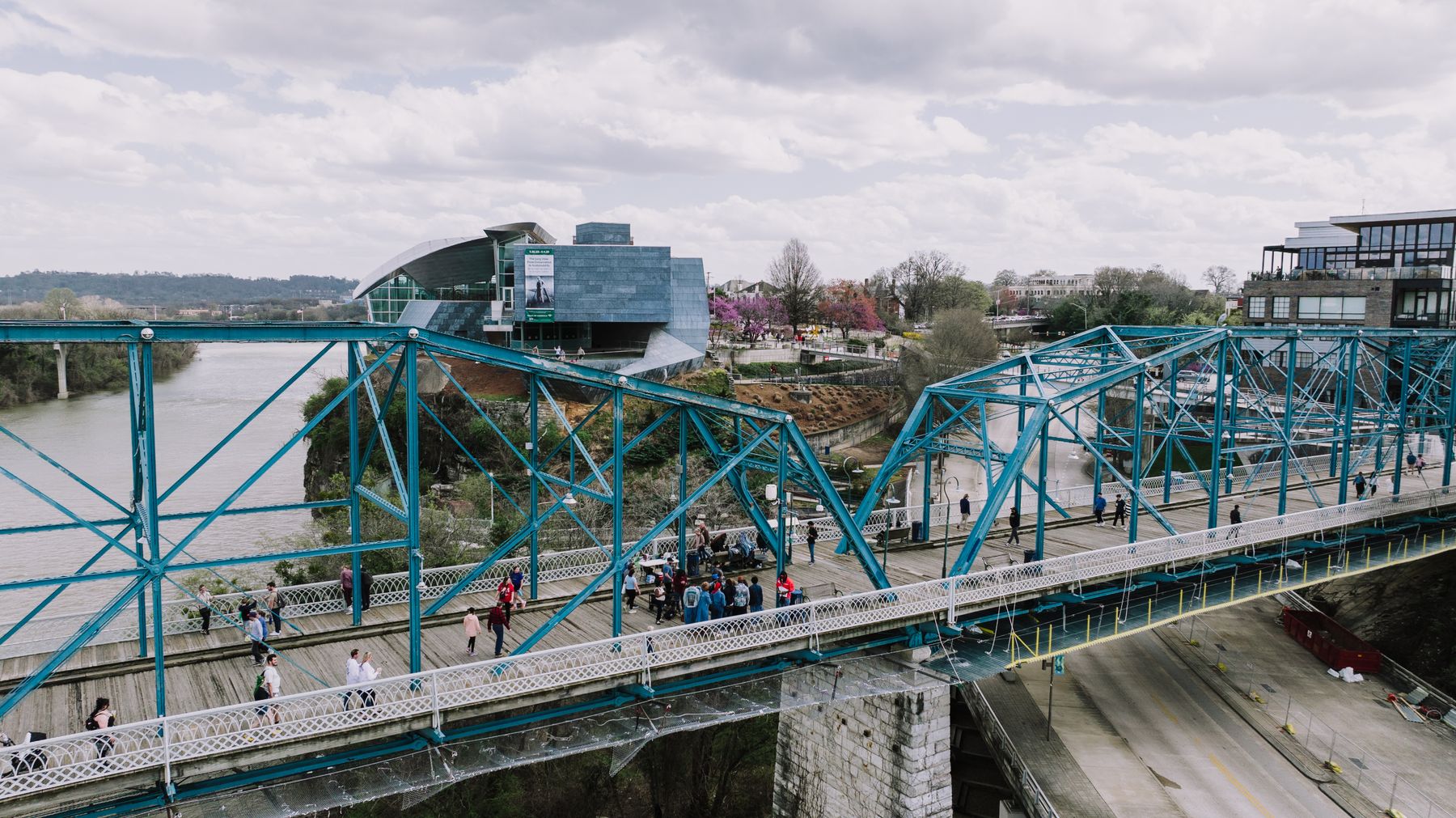
The 1993 reinvention
The old road became one of Chattanooga's most successful public spaces.
Walnut Street Bridge reopened in 1993 as a pedestrian linear park. The old automobile crossing became a place for walking, running, bicycles, festivals, sightseeing, and events.
More importantly, it reconnected areas that were changing on both sides of the river. Downtown and the riverfront were being redeveloped. On the north side, Coolidge Park, Frazier Avenue, and the broader North Shore district were evolving into destinations of their own.
The City of Chattanooga now describes the pedestrian bridge as a catalyst for revitalization on both sides of the river.[6]
There is a nice historical symmetry here. The original bridge helped encourage north-bank development in the 1890s. A century later, the restored pedestrian bridge helped connect another generation of North Shore development with downtown.
The bridge changed purposes, but it never stopped doing the thing that mattered most: connecting Chattanooga.
Economic impact
The best evidence of the bridge's value appeared when people could not use it.
It would be convenient to assign a single dollar figure to the economic impact of Walnut Street Bridge. It would also be hard to do honestly.
The bridge does not charge admission. Its economic effect is spread among restaurants, shops, hotels, attractions, events, real estate, parks, and the simple fact that pedestrians can move between two commercial districts without getting into a car.
The 2025 closure created a revealing real-world test. Chattanooga established a Walnut Street Bridge Construction Mitigation Grantfor nearby small businesses that depended on bridge-generated foot traffic and tourism. Eligible uses included marketing, parking assistance, customer incentives, and e-commerce work.[11]
Think about what that means. A nineteenth-century bridge built for horses, wagons, and streetcars had become so important to twenty-first-century pedestrian commerce that the city created an assistance program when people could no longer walk across it.
The economic importance of Walnut Street Bridge became unusually visible when the bridge was suddenly missing from everyday life.
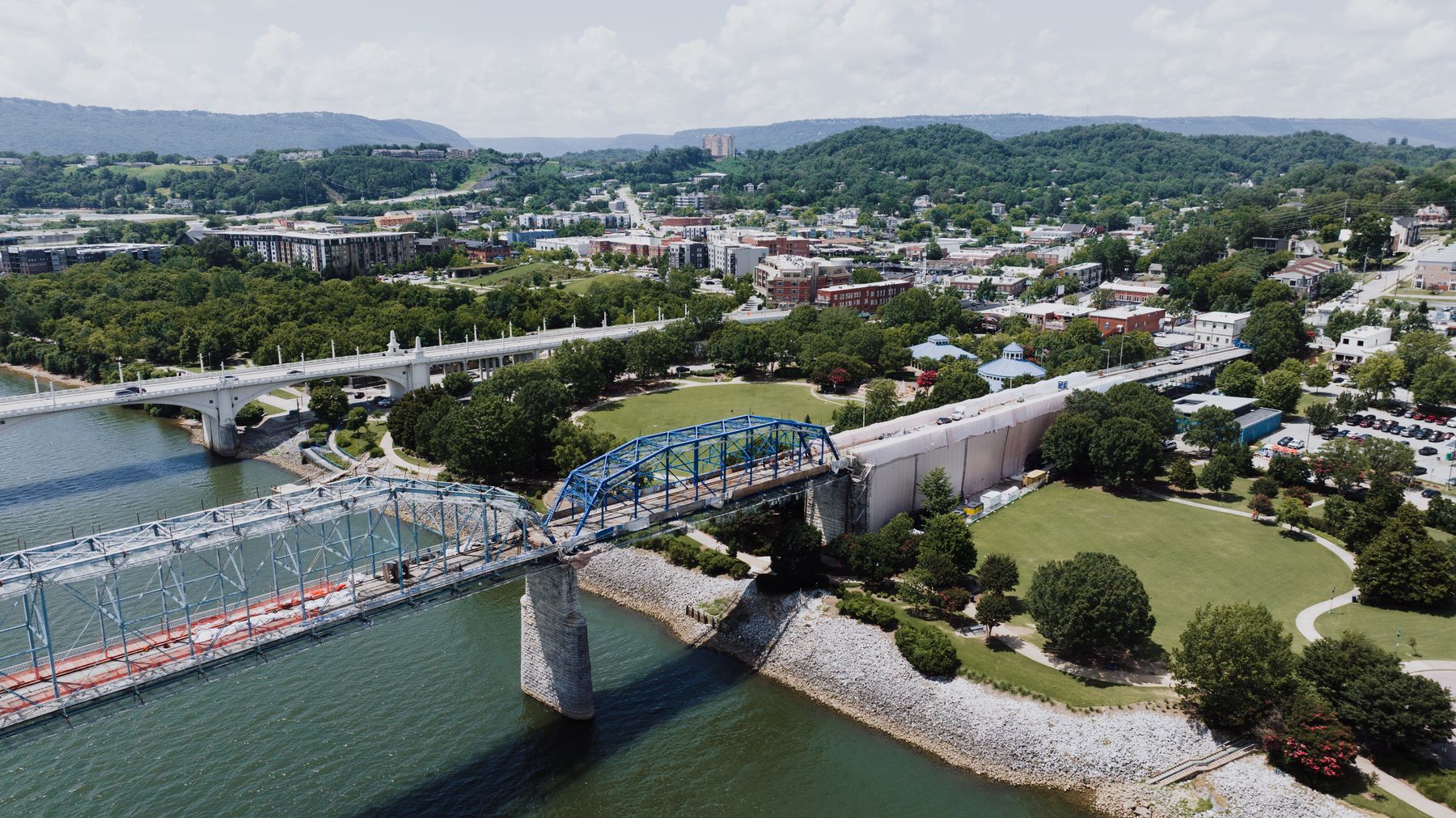
Opening up a 135-year-old bridge
The 2025–2026 project became much more than new deck boards and paint.
Walnut Street Bridge closed completely on March 17, 2025, for its first major renovation in roughly three decades. The original project budget was about $35.3 million and included structural repair, decking, electrical work, lighting, painting, and accessibility improvements. [7]
Then crews began exposing the structure.
They found substantially more deteriorated steel than expected. By May 2026, the city reported that workers had repaired or replaced more than 200,000 pounds of structural steel. The project cost had risen to approximately $47 million, with the additional amount largely driven by the steel work. The city said increased federal grant funding covered the increase without requiring additional city funding beyond the original local commitment. [8]
Crews sandblasted and repainted all six spans, replaced major electrical infrastructure and lighting, repaired structural components, and replaced roughly 95 percent of the bridge's wood with Alaskan yellow cedar. [8][9]
This was not a cosmetic refresh. Chattanooga opened up a structure designed in the 1880s, examined its bones, and fixed what had to be fixed so the bridge could keep serving a purpose its original designers could never have predicted.
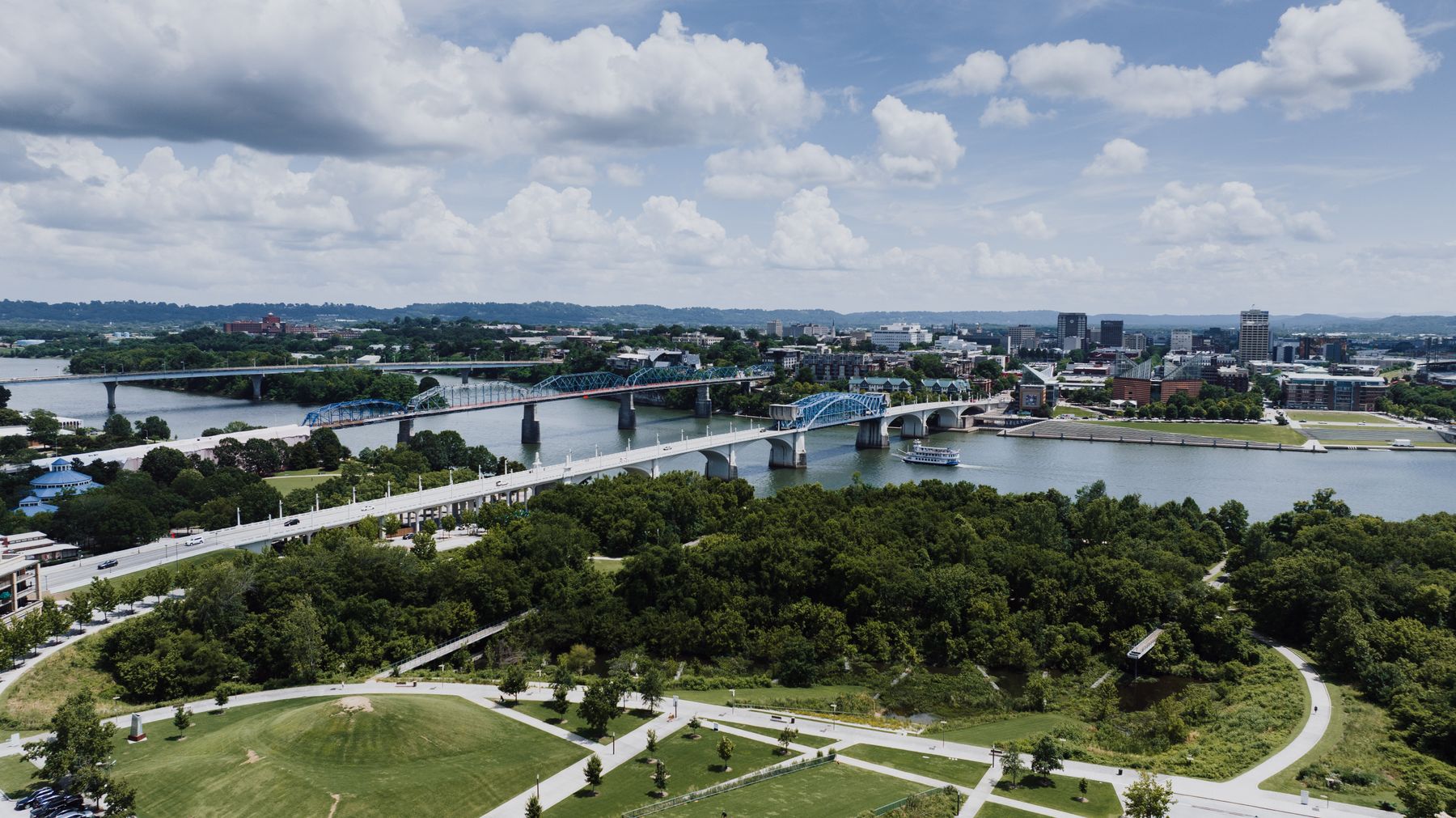
The trip became the destination
Plenty of people walk onto the bridge without needing anything on the other side.
Today Walnut Street Bridge stretches 2,376 feet, nearly half a mile, across the Tennessee River. It links downtown with Coolidge Park, the North Shore, and the restaurants, attractions, parks, and neighborhoods surrounding both ends.[6]
People run on it. They ride bicycles across it. They walk dogs. Families use it to move between downtown and Coolidge Park. Couples take pictures there. Events take over the deck. Visitors stop in the middle to look at the river and skyline.
And plenty of people go onto Walnut Street Bridge without actually needing to reach the opposite bank.
That may be the most unusual part of the whole story. Walnut Street Bridge is transportation infrastructure where the trip itself became the destination.
Chattanooga built the bridge because people needed a better way to cross the Tennessee River.
Chattanooga eventually saved it because people had discovered they simply liked being on it.
135 years later
Chattanooga walks across again.
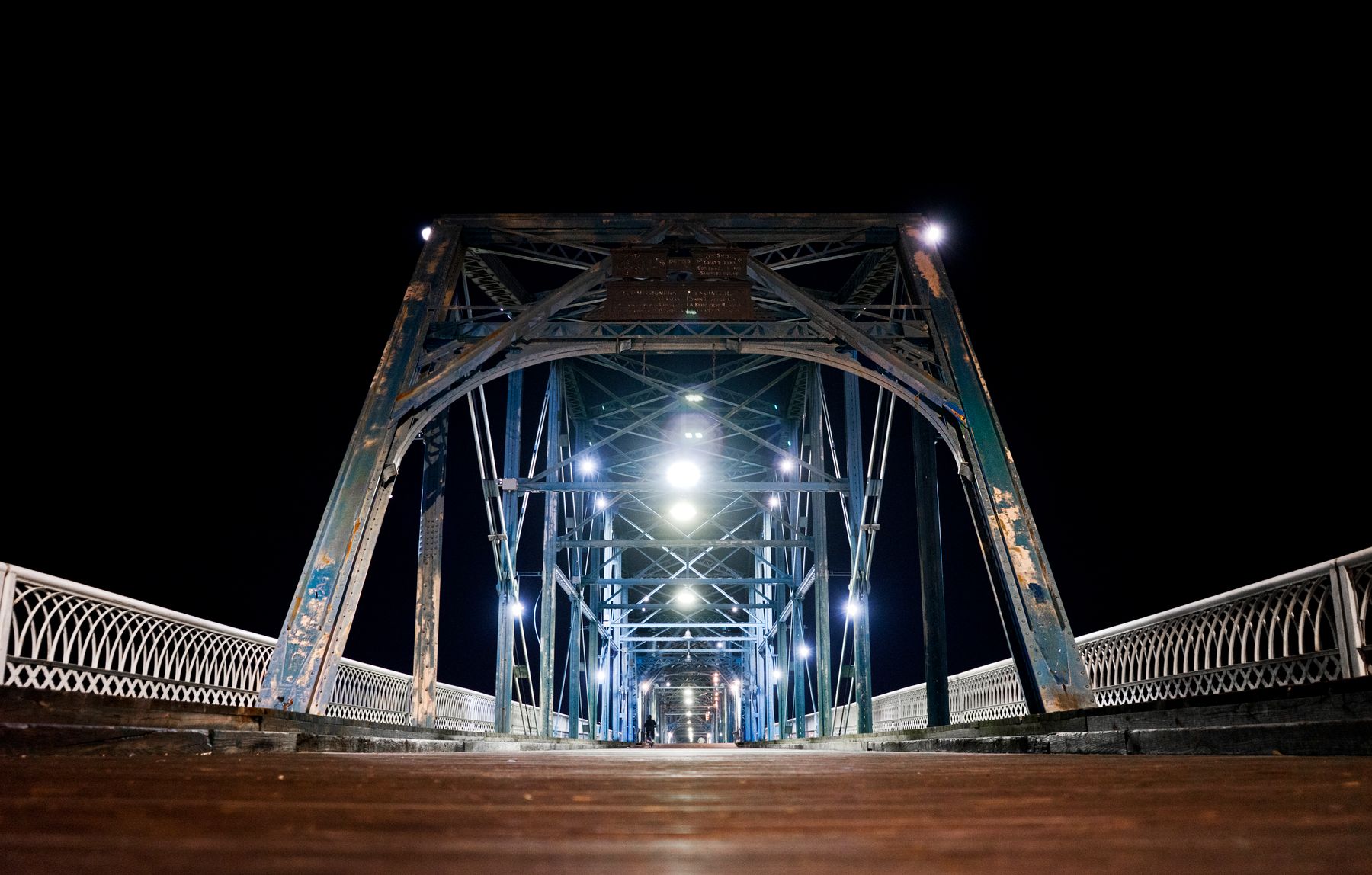
On Saturday, October 3, Chattanooga gets Walnut Street Bridge back. The public reopening program begins at noon at the south entrance. After the ceremony and ribbon cutting, the crowd will make a ceremonial walk toward the North Shore, with activities continuing until 3 p.m. [10]
It is difficult to imagine a more appropriate reopening.
In February 1891, thousands of Chattanoogans gathered to celebrate a new bridge across the Tennessee River. Then they walked across it. Within days, people were already using the bridge simply because they enjoyed the walk.
Since then, Walnut Street Bridge has carried horses, wagons, electric streetcars, automobiles, workers, tourists, runners, bicycles, and generations of Chattanoogans. It helped develop the north side of the river. Fires burned its wooden deck. Two Black men, Alfred Blount and Ed Johnson, were murdered there during one of the darkest periods in Chattanooga's history. Traffic eventually outgrew the structure. The city considered destroying it. Citizens fought to preserve it. Families helped fund its restoration. Its second life helped reconnect Chattanooga with the Tennessee River and with itself.
Now, after another generation of use, Chattanooga has invested tens of millions of dollars to save it again.
It is easy to call Walnut Street Bridge a Chattanooga landmark. That almost undersells it.
Landmarks are often things we look at.
The Walnut Street Bridge is something Chattanooga uses.
It is a street, a park, a historic artifact, a memorial landscape, an economic connector, an engineering survivor, and a community gathering place occupying the same strip of steel over the Tennessee River.
More than 135 years after the first crowd walked across it, Walnut Street Bridge is still doing essentially what Chattanooga built it to do.
It connects Chattanooga.
What has changed is everything that connection now means.