
First things first
No, Chattanooga did not become a giant federal park.
The name is the part that throws people off.
A National Park City is not a U.S. national park. Chattanooga's designation did not come from the National Park Service, and the city did not suddenly become federally managed parkland. The City of Chattanooga explicitly says the local movement is not affiliated with the National Park Service. [2][3]
The National Park City Foundation describes the concept as a long-term, city-wide movement inspired by national parks: people, organizations, businesses, neighborhoods, and local government working together to make urban life greener, healthier, and wilder. [3]
In other words, the point is not to put a ranger station at Hamilton Place or make downtown a protected wilderness area. The point is to start thinking about the entire city as one connected landscape instead of treating nature as something that only exists inside the boundary of a park.
The idea in one sentenceA city in a park.Not justa city with some parks in it.
How it happened
Chattanooga had to make a case for the designation.
Chattanooga's National Park City push began in late 2023. The city says the process included public meetings, more than 5,600 signatures of support, a locally developed charter, and a detailed "Journey Book" showing the work already happening across the area. [1]
This was not just a marketing department filling out a form. The National Park City process requires an evidence portfolio assessed against 23 criteria, followed by peer review. A review team visited Chattanooga in March 2025 to see parks, wildlife work, neighborhoods, urban spaces, and local partnerships firsthand. [1][5]
On April 3, 2025, the application was approved. Chattanooga became North America's first National Park City. At that moment it was the third established National Park City in the world, after London and Adelaide. Breda, Netherlands, became the fourth the following month. [1][8]
Why Chattanooga?
Honestly, this designation makes a lot of sense here.
If you live around Chattanooga, the outdoor side of this is not hard to understand. The Tennessee River cuts through the middle of the city. Lookout Mountain and Signal Mountain rise around it. Trails, climbing areas, greenways, paddling, mountain biking, fishing, parks, wildlife, and forest are not things you have to drive half a state away to find.
The National Park City Foundation pointed to more than scenery. Its review highlighted Chattanooga's transformation from a heavily polluted industrial city into an outdoor destination and biodiversity center, along with land preservation, clean water work, community gardens, food forests, wildlife restoration, and partnerships among nonprofits, researchers, residents, businesses, and city government.[4]
That history is probably the most interesting part to me. Chattanooga did not get the designation because somebody found a pretty overlook. It got there because the city's modern identity has been built around reclaiming the riverfront, reconnecting neighborhoods to outdoor spaces, and treating the landscape as an asset instead of something to build around and forget.
The local charter
Chattanooga made seven commitments.
The designation is supposed to be a beginning, not a trophy that goes on a shelf. Chattanooga's National Park City charter is organized around seven connected commitments.[4]
That list is why "National Park City" is broader than parks. Trails and green space are obviously part of it, but so are neighborhood access, agriculture, education, art, culture, development, food, and the simple question of whether people can actually reach and enjoy nature where they live.
What changes for residents?
There is no magic switch. There is a long-term promise.
This is where the designation can sound bigger than it is if nobody explains it.
Becoming a National Park City does not instantly create a new park on every block, erase development pressure, or hand the city a giant federal check. Chattanooga's own Parks and Outdoors material says the recognition itself does not come with direct funding. [7]
What it does create is a public framework for future work. The city points to environmental protection, education, recreation, cultural heritage, eco-tourism, partnerships, and investment as areas where the designation can help focus attention and collaboration. [7]
That means the real test comes later. Five or ten years from now, are more neighborhoods connected to trails and green space? Is the river healthier? Are native plants and wildlife better supported? Are parks easier to reach without a car? Do kids grow up seeing outdoor access as a normal part of living in Chattanooga?
A designation cannot answer those questions by itself. It can give the city a reason to keep asking them.
What visitors should care about
This is not one attraction. The whole city is the point.
A normal national park trip usually has an obvious boundary: you enter the park, visit the overlooks or trails, and leave. Chattanooga's version is almost the opposite.
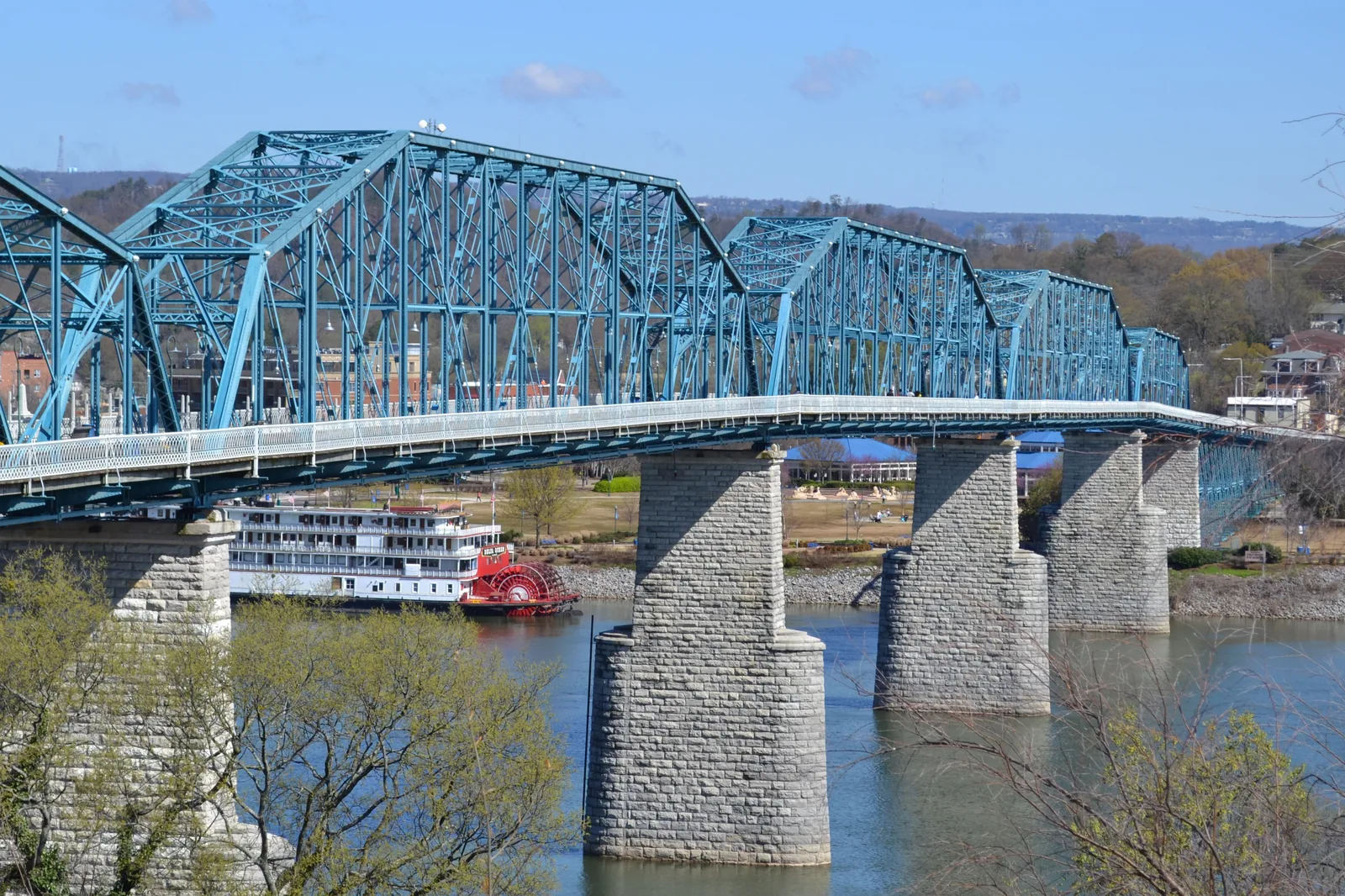
You can ride the Riverwalk, cross the Walnut Street Bridge, mountain bike, paddle, climb, visit a neighborhood park, walk downtown, explore the riverfront, eat somewhere local, and head toward the mountains without ever feeling like you moved between two completely separate worlds.
That is the concept the designation is trying to reinforce. Nature should not be the place you drive to after leaving the city. It should be woven into the city.
Quick answers
Chattanooga National Park City FAQ
Is Chattanooga now a U.S. national park?
No. A National Park City is not a national park and Chattanooga's program is not affiliated with the U.S. National Park Service. The recognition comes through the National Park City Foundation's international peer-review process. [2][3][5]
When did Chattanooga get the designation?
Chattanooga's application was approved on April 3, 2025, making it the first National Park City in North America. [1]
Was Chattanooga the third or fourth in the world?
Both numbers show up because of timing. Chattanooga was recognized in April 2025 after London and Adelaide, so it was the third established National Park City at that time. Breda was recognized in May 2025 and became the fourth. Today the four established cities are London, Adelaide, Chattanooga, and Breda. [4][8]
Does the designation come with federal money?
No automatic federal funding comes with it. Chattanooga's Parks and Outdoors material says the recognition itself does not provide direct funding, although it can help attract partnerships and investment around green initiatives. [7]
The takeaway
The title matters less than what Chattanooga does with it.
I like the National Park City idea because it matches how Chattanooga already feels at its best. The river is not off to the side somewhere. The mountains are not a distant backdrop. Trails, neighborhoods, downtown, wildlife, parks, food, recreation, and culture all overlap here.
Calling Chattanooga a National Park City does not protect all of that by itself. It does put a name on the idea that those things should stay connected as the city keeps growing.
The designation was the easy part. Living up to it is the interesting part.